
July 2025:
In which I reflect on the 80th anniversary of Hiroshima's atomic bombings

Good morning lovely,
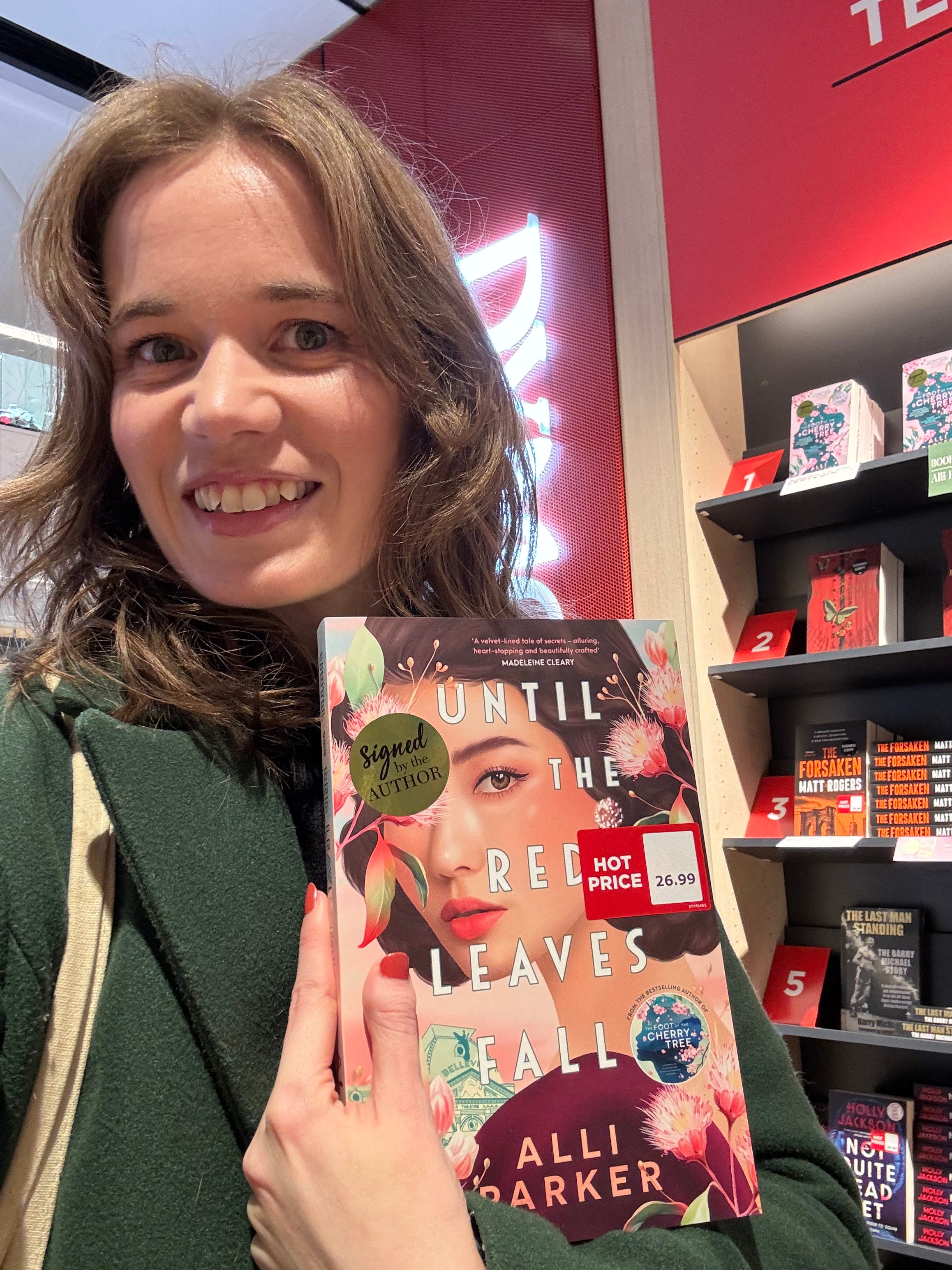
It’s been a whirlwind of a week since my new novel, Until the Red Leaves Fall, has been published. I’ve been all over Victoria, at book events and writers’ festivals, rubbing shoulders with people I respect and admire, absorbing stories and anecdotes and, fortunately enough, signing books and meeting readers too. There’s a lot more events to come - I’m in Sydney next week, Adelaide in September, and there’s a few more Melbourne events rolling in - so please visit my website if you’re interested in coming along to hear me talk about Emmy Darling and Until the Red Leaves Fall.
But yesterday was the 80th anniversary of the US bombing Hiroshima. If you’ve read At the Foot of the Cherry Tree - or even the blurb - you’ll know that my grandmother, Cherry, survived the bomb. Three of my aunts, one of my uncles and one of my cousins went to Japan to represent Grandma and the family at the service they held in the peace park and, as they’ve been sharing their photographs and videos of the event, it’s been impossible for me not to reflect on the significance of the date, for both my family and the world.
I’ve always known my grandmother survived Hiroshima. I imagine I must’ve been told quite young as I don’t remember the exact moment I learnt that fact but I do remember sitting in Grandma and Grandpa’s lounge room, poking my fingers through the lace doilies she crocheted and had laid over the back of every seat on the sofa, listening to her talk about what happened on the morning of August 6th.
‘I sat down to eat breakfast and then the bomb… it was a big flash of light, then a very loud noise, then it all went dark. A cupboard fell on me and I thought, oh no, I’m stuck!’ She’d always laugh a little here. ‘But I got out and the whole house, the whole city… gone.’
When you’re young, it can be very difficult to comprehend a world outside what you know. What Grandma described felt like something that happened such a long time ago. How could it still be important?
Unfortunately, moments in history like the bombings at Hiroshima and Nagasaki are all the more important now, as world conflicts rear up once again.
When I came to write about Grandma’s experience on that day in the novel, I was terrified. How could I possibly convey what she’d been through with the respect that deserved? How to write it without straying into exploitation? Or her, of her past, of my family?
And so, in the early versions, I veered away from it. The very first version of the Hiroshima chapter of At the Foot of the Cherry Tree was Nobuko at home, having breakfast, the flash of light and explosion, her getting out from beneath the cupboard -
And then I get us out of there.
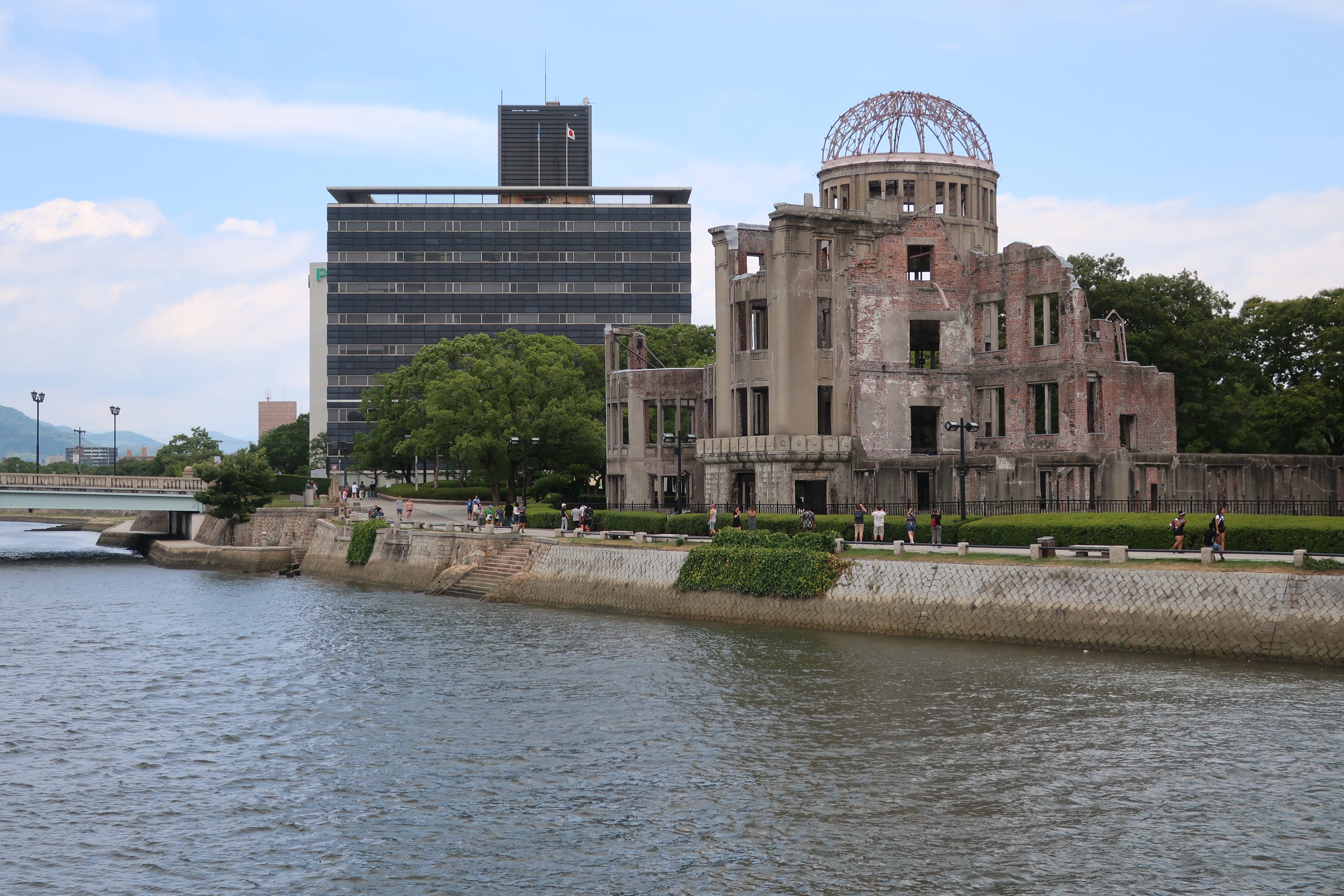
But the more research I did, the more I reflected on how the city of Hiroshima tells the history, and the more I thought about this article from The New Yorker, first published in 1946, written by John Hersey, the more I realised I couldn’t look away from it.
My grandmother couldn’t. She had to endure it. I had privilege in looking away because it made me uncomfortable. She never had that.
That thought changed my entire view on the chapter.
Because reading about one of the worst wartime atrocities SHOULD be uncomfortable. It SHOULD make you want to look away from it. Readers should not read a chapter about one of the most famous historical war crimes and feel okay about it. I didn’t want people to read about nuclear warfare and feel nothing.
I usually can write a chapter in a day or two but chapter nine of At the Foot of the Cherry Tree took me two weeks to write a first draft of. It is possibly one of the best things I’ve ever written, I know it affects people in the way I intended, but I find it incredibly hard to read back. Every time I do, I can see the teenage girl my grandmother was, trying desperately to survive and get to safety, with no idea if she would. It always breaks my heart.
The cities of Hiroshima and Nagasaki tell their histories with the intention of ‘never again’. They weren’t country backwaters or insignificant cities in Japan. Hiroshima was the third biggest city after Tokyo and Kyoto. Nagasaki was a thriving port city. These nuclear weapons killed hundreds of thousands of people in a war that was already ebbing.
The thing is, it is happening again. You look to Gaza, to Ukraine, to Sudan, to Thailand and Cambodia - these wars are still happening. These conflicts are crescendoing and the threat of catastrophic damage to both persons and place is very very real. How many people have been killed in Palestine? How many in Ukraine? It’s a privilege that we can put our phones down and look away from it.
They estimate between 90,000-160,000 people were killed at Hiroshima. 60,000-80,000 killed at Nagasaki. They are estimating that at least 65,000 Palestinians have been killed by Israel since 2023, although those numbers are in contention. That’s not even including any Israeli civilians who have been caught up in warfare or aid workers or journalists.
What did all those people die for? The great majority of these people are civilians. Were civilians. Hiroshima was supposed to be a ‘safe’ city as it didn’t have a military presence. There were universities and parks and trams and rivers but no guns or naval fleets.
My grandmother survived but she almost didn’t.
I wouldn’t be here if that had happened.
People have asked her what she thinks about the bomb. People have asked me what I think about the bomb. As though our opinion matters (mine far, far less than hers).
She said if the bomb had never happened, she’d never have the life she has now.
I say there are no winners in war, only those who surrender and those who don’t.
It certainly feels like that more and more at the moment.
If you’d like to and you’re able, I’m taking donations for UNRWA to help get aid into Gaza. You can donate whatever amount you’d like - any amount helps - through my ko-fi link here. I had these leaflets at my launch and we’ve raised $620 since Until the Red Leaves Fall has come out.
Thank you to everyone who has come along and donated.
Alli x
Thanks Alli. Powerful and poignant stuff. Thanks for sharing this with us. I’m looking forward to getting my hands on your book now I’m back in the country.
So powerful and beautifully said Alli.